DeepSeek V4 Runs on Huawei Chips,Redefines AI Tech
DeepSeek V4 Strengthens Huawei AI Chip Ecosystem
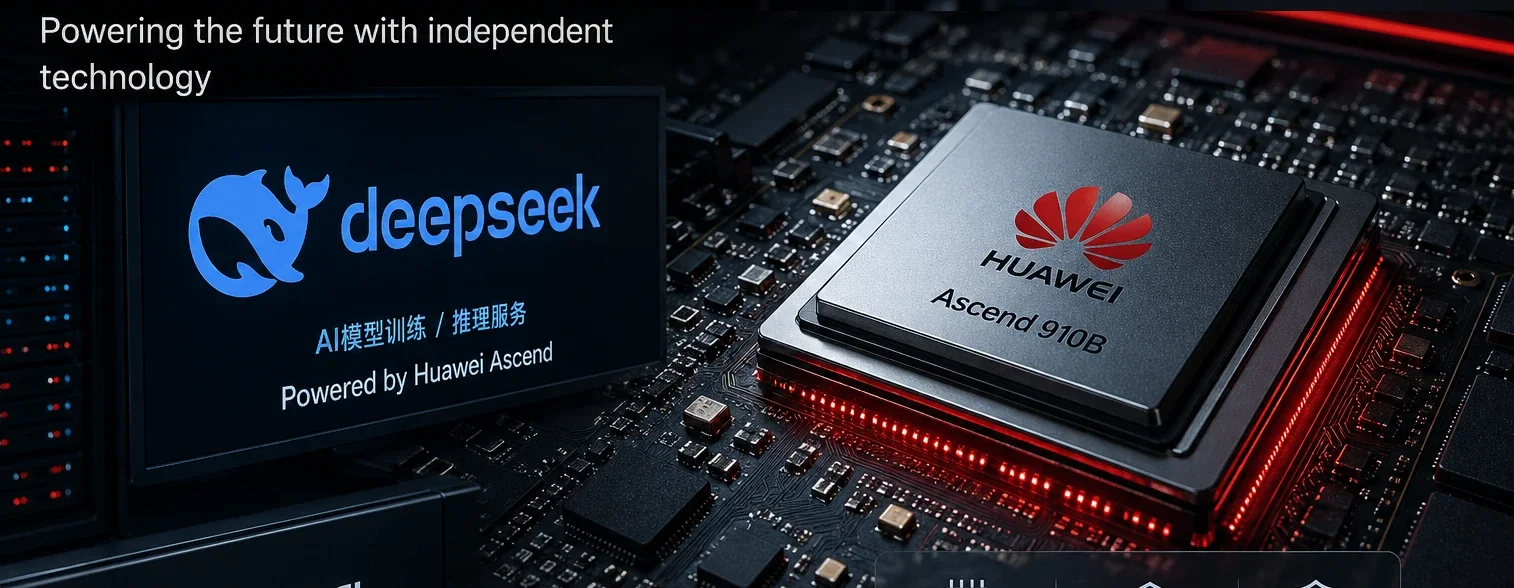
DeepSeek Launches Huawei-Optimized AI Model V4 Amid US-China Tech Rivalry Overview of the Announcement
Chinese AI startup DeepSeek has released a preview of its new model, V4, which is specifically adapted for Huawei’s domestic chip architecture. The launch highlights China’s accelerating push toward technological independence in artificial intelligence and reduced reliance on US semiconductor technology.
The company stated that the Pro version of the model achieves strong performance in world-knowledge benchmarks, ranking just below Google’s proprietary Gemini-Pro-3.1. According to DeepSeek, the system demonstrates competitive capabilities while significantly reducing operational costs compared to leading AI models.
Shift from Nvidia to Huawei Chips
A key feature of the V4 model is its integration with Huawei’s Ascend chip ecosystem. Huawei confirmed that its chips were used in parts of the model’s training process.
This marks a notable shift for DeepSeek, which previously relied heavily on Nvidia GPUs, the global standard for training large-scale AI systems.
Industry analysts describe this transition as a strategic milestone. He Hui, a semiconductor research director at Omdia, stated that Huawei’s Ascend processors represent China’s strongest domestic alternative to Nvidia hardware. The collaboration between DeepSeek and Huawei suggests that advanced AI systems in China can increasingly operate on locally developed infrastructure.
Industry Impact and Global Context
The release of DeepSeek V4 comes at a time of heightened competition between the United States and China in artificial intelligence and semiconductor technology.
Nvidia currently dominates the AI chip market, with its GPUs powering most leading global AI models. However, US export restrictions on advanced chips have accelerated China’s efforts to build a self-sufficient semiconductor ecosystem.
Nvidia CEO Jensen Huang has previously warned that restrictive policies could weaken the company’s developer ecosystem in China. He stated in a recent podcast that widespread adoption of Huawei-based AI systems would represent a significant strategic setback for US technology leadership.
Performance and Technical Characteristics
According to early evaluations shared by Lewis Tunstall, a machine learning engineer at Hugging Face, DeepSeek V4 has quickly gained traction among developers and briefly reached the top position on the Hugging Face trending models list.
Key technical strengths include:
Strong performance in long-context reasoning tasks
Efficient handling of large and complex text inputs
Lower operational cost compared to competing frontier models
However, the model also has limitations. It currently does not support multimodal capabilities such as image or video processing, which are increasingly common in leading AI systems.
Geopolitical and Regulatory Backdrop
The launch has intensified ongoing debates about technology transfer and AI competition between the United States and China.
DeepSeek has faced scrutiny from US policymakers and competitors, who question whether its development benefited from American technology or know-how. The company has acknowledged using Nvidia hardware but has not confirmed whether any restricted chips were involved. It also denies intentionally using synthetic training data generated by OpenAI systems.
The release occurred shortly after US officials accused China of large-scale intellectual property appropriation in the AI sector. It also precedes a planned diplomatic meeting between US President Donald Trump and Chinese President Xi Jinping in Beijing.
Semiconductor Market Reaction
The announcement had noticeable effects on financial markets:
Chinese chip manufacturers such as Huahong Semiconductor and SMIC saw significant stock increases, rising approximately 15% and 10% respectively.
Investor sentiment improved on expectations of increased demand for domestic AI hardware.
Nvidia shares also remained stable to positive, supported by strong revenue forecasts from Intel and ongoing confidence in the global AI growth cycle.
Strategic Significance
The collaboration between DeepSeek and Huawei represents more than a product launch. It signals a broader shift in China’s AI strategy toward vertical integration of software and hardware ecosystems.
If sustained, this approach could reduce dependence on foreign chip suppliers and strengthen China’s position in global AI development. At the same time, it raises concerns in the United States about fragmentation of the global AI supply chain and potential loss of technological influence.
Conclusion
DeepSeek’s V4 model illustrates the accelerating convergence of AI innovation and geopolitical competition. By aligning with Huawei’s chip technology, the company is contributing to China’s broader goal of technological self-reliance while challenging the dominance of US-based AI infrastructure providers such as Nvidia.
Source: https://www.manilatimes.net/2026/04/26/business/to